3186: Truly Universal Outlet
| Truly Universal Outlet |
 Title text: Building Inspectors HATE This One Weird Trick |
Explanation

|
This is one of 46 incomplete explanations: This page was created by a 110 VOLT BRITISH PLUG.
|
This comic shows a layout for a universal outlet which would theoretically fit any mains power-plug. Throughout the world, countries and regions have their own standards for outlets, including their shape, contact amount, and voltage. When traveling, or otherwise using devices from other countries, it is often necessary to have an adapter to connect one type of plug to a different outlet.
The comic shows an outlet with fifteen sets of holes merged together, so that any of those plug types might fit. In reality, it's possible that a plug may not be held securely, and it may fall out or lose contact. For example, the hole for types D, M, and O at the top of the outlet has three distinct holes, some of which are entirely contained within others; a prong for a smaller type would not make contact with the walls (without particularly spring-loaded contacts). Different outlets can also mean different voltages, which can risk damage if devices do not account for it. Although universal plug adapters actually exist, none of them are as 'universal' as the one shown in this comic, most likely due to these safety concerns.
The comic also seems to misrepresent type E sockets — it seems like Randall wasn't aware of (or ignored) the fact that type E sockets have a grounding pin that protrudes out from the socket, and represents it as if it were a hole in the socket instead. In reality, it would be difficult to make a socket that safely grounds type E plugs without being simultaneously incompatible with a large number of other plugs that aren't designed to accommodate the grounding pin, probably requiring the prominent socket-pin to be a spring that retracts far into the socket when pressed by a plug's ground pin.
The comic also seems to not notice the lack of grounding for full compatibility with F plugs. This leaves them in the same state as type E, above. This could be fixed by adding the extra pins for grounding. Given that most plugs in E and F regions are compatible with both standards (CEE 7/7) and have the E ground connected to the F ground through a front plate bigger than the hole for the E standard, it would theoretically be possible to make a mostly universal plug (with the exception of pure CEE 7/5 Schuko and some pure French-style CEE 7/6 that don't have the external metallic plate, but both of those are vanishingly rare, phased out by the CEE 7/7).
The title text references the classical clickbait format "<organization/role> hate this one weird trick," implying <organization/role>'s services will be no longer needed if the trick works out as it claims to, and therefore (according to the clickbait) they do not want you to find out about the trick. In this case, however, building inspectors likely hate the design solely because of its grotesque safety problems.
While this comic is not part of the Cursed Connectors series, it does follow a similar theme of unorthodox or dangerous ways to make electrical connections.
The sockets
| Socket type | Appearance | Standardized/Primarily used in... (Source) | Details of plug |
|---|---|---|---|
| A (NEMA-1) |
USA/Canada (older installations), Mexico and Japan | Blades (N-L) 12.7mm apart Ungrounded Blade widths differ where polarity should be observed. May be usable in Type B socckets. | |
| B (NEMA-5) |
USA/Canada, Mexico, and Japan | Blades (N-L) 12.7mm apart Ground 'U'-pin 11.9mm downwards | |
| C (Europlug) |
Europe, South Africa, South America and Asia | Pins (either polarity) 19mm apart Unground May be accepted by type E, F, J, K, N sockets, plus hybrids | |
| D (BS546, 5A) |
India; previously UK, with legacy uses such as stage-lighting | Pins (N-L) 19mm apart, Ground pin 22.2mm upwards | |
| E (CEE 7/5) |
France, Belgium, Poland, Slovakia and Czechia | Pins (N-L) 19mm apart Ground pin from socket into plug CEE 7/7 plug is cross-compatible with Type F. | |
| F (CEE 7/3 'Schuko') |
Germany, Spain; broad compatibility with rest of Europe (excluding UK or Ireland) and Russia | Pins (either polarity) 19mm apart Grounded via paired socket clips (not shown) CEE 7/7 plug is cross-compatible with Type E. | |
| G (BS1363) |
UK, Ireland, Malta, Malaysia and Singapore | Blocks (N-L) 22.2mm apart Ground block 22.2mm upwards | |
| H (SI32) |
Israel, the West Bank and the Gaza Strip | Angled blades[pre-1989] or pins (N-L) 19mm apart<br.>Ground (blade/)pin 9.5mm down Only pin version is shown, hybrid sockets take both. | |
| I (NZS 3112) |
Australia, New Zealand, China, and Argentina | Angled blades (Australasia: N-L; Argentina: L-N) 13.7mm apart Ground blade 10.3mm down | |
| J (SN 441011) |
Switzerland and Liechtenstein | Pins (N-L) 19mm apart Ground pin 5mm down | |
| K (DN10A-R) |
Denmark and Greenland | Pins (L-N) 19mm apart Ground 'D'-pin 13mm down | |
| L (CEI 23-50) |
Italy and Chile | Pins (either polarity) of 19mm or 26mm apart (only narrower version illustrated) In-line central Grounding pin (does not enforce orientation) | |
| M (BS546 15A) |
South Africa; some niche legacy (e.g. stage-lighting) use in Britain | Pins (N-L) 25.4mm apart Ground pin 28.6mm up Variants exist, but the comic version is too small against the original standard. | |
| N (IEC 60906-1) |
Brazil and South Africa | Pins (L-N) 19mm apart Ground 3mm down | |
| O (TIS 166-2549) |
Thailand | Pins (L-N) 19mm apart Ground pin 11.9mm up |
Transcript

|
This is one of 38 incomplete transcripts: Don't remove this notice too soon. If you can fix this issue, edit the page! |
- [A diagram of an electrical outlet is shown, merging the holes of many international outlets. Dashed lines indicate individual standards' holes, which are labeled by their corresponding letter from A to N. The entire outlet is the combined area of these holes.]
- Wiring tip: To make your building friendly to international visitors, cut holes in your outlet plates to make them compatible with all fifteen IEC plug types.
Trivia
- This comic was released on Boxing Day during Christmas of 2025, but makes no reference to Christmas.
- The previous comic, released on Christmas Eve, 3185: Sauropods also made no reference to Christmas.
- This thus marks the second year on a row without any Christmas comics released during those days, see this trivia from the comic 3029: Sun Avoidance released on Christmas Day in 2024 (first time such a day was not given a Christmas comic).
 Add comment
  Create topic (use sparingly)
  Refresh
 Discussion
No comments yet, add the first comment! Caliban (talk) 16:25, 26 December 2025 (UTC)
- You should have mentioned that this is the SECOND YEAR IN A ROW without Christmas comics! ;-( --Kynde (talk) 12:17, 28 December 2025 (UTC)
I checked on the info.0.json and there doesn't seem to be a transcript for this one. I don't know whether that's normal, since I understand that most comics have one, but I wrote in a basic transcript. I might have just not looked in the right place. R128 (talk) 16:58, 26 December 2025 (UTC)
- The info.0.json data has not contained a transcript for a while now. —73.70.174.157 05:47, 31 December 2025 (UTC)
I try not to be nationalistic or jingoistic about anything, but I'm sorry—British plugs are simply the best plugs. Strong, easy to use and safe—fits snugly into the socket, can't expose live or neutral outlets without first connecting to earth, no overly sharp pins. I don't like myself for saying this, but I honestly think the rest of the world would be better off switching to our plugs.109.149.114.159 18:00, 26 December 2025 (UTC)
- I'm American, and British plugs and sockets seem huge and clunky to me. I've also heard that (some?) Brits think US plugs are alarmingly flimsy. I'm sure that a big part of the differences of opinion is what we grew up with, and I'd love to hear a physics/engineering/UI/UX-based evaluation of which one is *actually* better. -- Dtgriscom (talk) 19:38, 26 December 2025 (UTC)
- I am an American (soon to be a Gileadian after we will rename our nation to the Republic of Gilead —— ¡ChrisoFascism sucks!); so now I do not have a dog in this fight, but the | EuroPlug looks very space efficient, unlike the bulky American plus & sockets, & the ridiculously enormous UK-plugs.
- I am also an American and I agree with the sentiment that British plugs/sockets seem huge and clunky, but it depends on the plug and socket in the US how flimsy they are. I have found some sockets where plugs will literally fall out of them, and other ones where it is hard to pull them out. But American plugs are dangerous from the lack of protection against contacting power and neutral at the same time while they're live. 2601:441:4b7c:7c6a::1009 (talk) 03:15, 27 December 2025 (UTC) (please sign your comments with ~~~~)
- I've heard this sentiment before, but I have no idea where it comes from. British plugs are ridonkulously huge and not exactly easy to use. From safety perspective, I find it odd only a handful of (European) socket types are recessed. 81.94.52.186 22:07, 26 December 2025 (UTC)
- British plugs are just the right size for a hand (assuming you don't have very small hands, when you probably shouldn't be messing about with them) and the direction the cable emerges is much more convenient (e.g. handy for sockets behind furniture, outlets for worktop equipment in a kitchen or in server racks). At least that's my assesment, having had to use both US and UK systems in all cases. ;) 92.23.2.208 22:47, 26 December 2025 (UTC)
- British plugs do not even meet their own design specs. This is why there is an internally different, but externally identical (apart from markings) BS 1363-2 plug for EV charging. This exists because if you draw the continuous rated current from a standard socket it is likely to melt.
- British wiring has many problematic aspects. Ring final circuits, undersized wiring for the protective fuse, too many devices on the same circuit, too few outlets so people stack extenders for the one socket in the room and run extensions cords under the rug, excessively tolerant ground fault detectors. Most of the supposed safety features of British plugs are trying to compensate for other design flaws. Not to mention mechanically identical sockets with different continuous current ratings.76.180.39.133 23:20, 26 December 2025 (UTC)
- I‘ve also seen this claim before, and ever since, I‘ve wanted to defend Switzerland‘s (type J) plug as I believe it is equivalent in many aspects and superior in some. The current-carrying prongs are plastic sleeved like the British plugs, in addition to the socket being recessed, everything is GFCI-equivalently protected, the plug lies with the prongs parallel to the floor, extension cables have doors in front of the holes, but I think the biggest advantage is the size, as one place in the wall fits three sockets (or one and a light switch). I might not have every argument present at the moment, and I am certainly biased as a Swiss person ofc. 212.186.158.218 19:44, 28 December 2025 (UTC)
Someone will probably address this, but voltage issues aside, I would guess that the USAGE of the various pins across countries is likely different in catastrophic ways. E.g. I imagine that one glob of pins is hot/live in one country but ground/earth in others so that plugging an appliance from different countries into the universal outlet would cause shocks, breaker trips, explosions, etc. I did laugh at the title text - yes, I'm sure building inspectors are constantly encountering this mess. ;) 47.248.235.170 18:39, 26 December 2025 (UTC)Pat
- Nope. The ground pin is always intentionally made special in all mains plugs existing, and it's basic potty training for electricians to never, ever trust the two others. --88.65.244.212 20:24, 26 December 2025 (UTC)
- Case in point, I got myself a three way extension from a supermarket here in France. It was wired up with the live and neutral reversed. I fixed mine, but there may be hundreds of them in use elsewhere. Don't trust that L is L and N is N, just don't. 2A01:CB08:82C3:1A00:B8CA:C260:318B:E48D 11:39, 4 January 2026 (UTC)
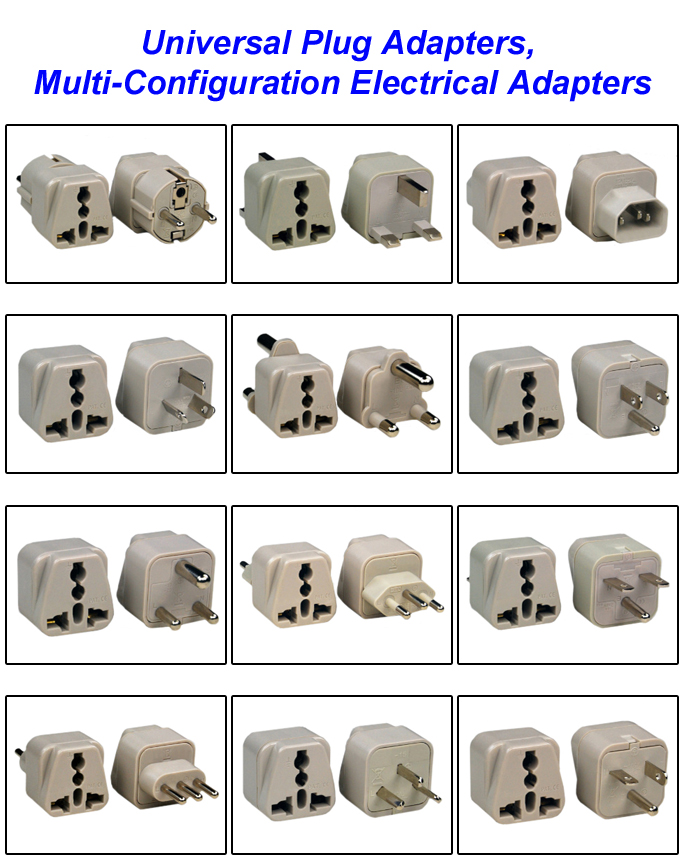
Universal/travel plug adaptors do kind of look like this. Not quite as universal though. 220.244.124.170 19:50, 26 December 2025 (UTC)
- https://www.youtube.com/watch%3Fv%3DAIOqOxI0K_I --88.65.244.212 20:24, 26 December 2025 (UTC)
- Some come surprisingly close: https://tessan.com/products/65w-gan-universal-travel-adapter-wta09 https://canyon.eu/product/cns-ta1005w/ https://aluratek.com/products/universal-20w-travel-adapter (not an endorsement - I expect most if not all of these are dangerous) 2600:4041:351:4800:D040:FA1F:BB70:CDED 01:26, 27 December 2025 (UTC)
Just for my own amuesment, I tried to work out what bits were which, green for the pins, red for 'the aditional bits the pins would rattle around in' (the rest left black). Really not sure I got all the "D E M O" bits right. E, in particular, looks like it has a reverse pin that goes into the plug, but I'm also not as familiar with the old D+M different ampages/sizes (I'll only ever see them in stage-lighting, and I don't plug 'em in or out) as I am with the type-G I normally use. ...but, if anyone wants it, it'll be downloadable for the next seven days. Tidy it up, correct it as necessary, change the timings (currently 1 second a frame), recolour it (perhaps use different colours for Live, Neutral and (where there is one) Earth), whatever you want. If it's useful. And if that's done by anyone who can upload to this site (or someone does a better version off their own back). 92.23.2.208 21:03, 26 December 2025 (UTC)
FWIW, it is notable that this plug is officially not a cursed connector. --2001:A62:572:F601:905B:6D6D:6686:E863 00:14, 27 December 2025 (UTC)
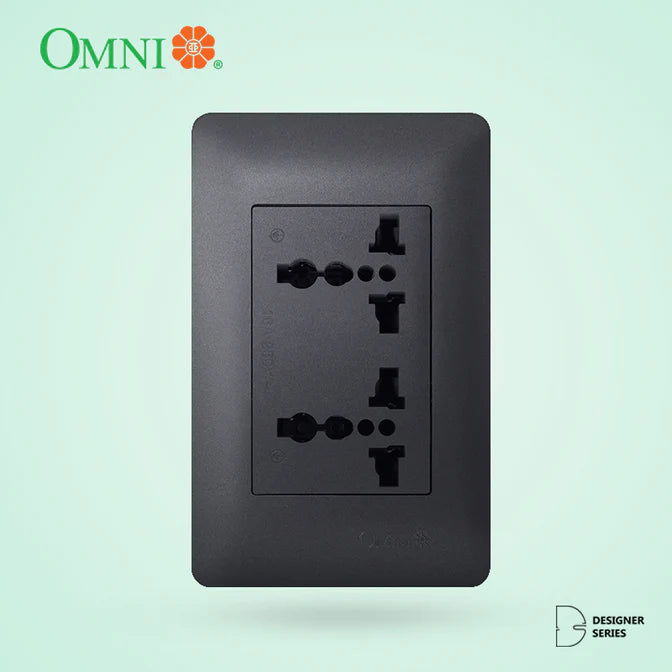
These already exist outside of this comic: https://diyhardware.ph/cdn/shop/files/YAE0838_800x.webp?v=1686379936 2605:C740:90:F41:842D:1EC2:FEB9:2B80 04:16, 27 December 2025 (UTC)
- You can also find them on airplanes.
- You can also buy them for traveling.
- (That travel plug also has "universal" prongs for plugging in to various different outlets, selected by those sliders on the side.) —Scs (talk) 06:00, 27 December 2025 (UTC)
The comic doesn't actually specify *anything* about the internals of the universal outlet, it just says to cut holes in whatever outlet you have. I find this the funniest part of it. Rorrison (talk) 13:07, 27 December 2025 (UTC)
- That was my thought as well. "You can definitely 'plug' your device into this outlet, no promises on whether your device will be able to receive appropriate electrical power from it though."57.140.28.16 16:49, 29 December 2025 (UTC)
- Looking through the various usages of the standards, there's not even any guarantee of correct polarity (even for those systems that do have a correct polarity, rather than don't seemto care, e.g. type C ungrounded and both subtly different type-L groundeds - and very interesting to read about the dual-metering situation behind that, BTW).
- For practical examples, type-I in Australasia has Live and Neutral one way round (enforced by the Earth connector and the pin-angles), but the type-I as used in Argentina respectively has Neutral and Live (for the same enforced orientation). And I think Brazil (type-N) already has its own local issues of the same sockets potentially being L/N (plus Earth pin) or +~/-~ as antiphases (with third pin acting as baseline Neutral) to effectively give double the (AC) potential.
- Then there's the case of expectations of voltages from 120 to 250, frequencies of at least 50-60Hz (for equipment not smart enough to handle such differences already), and you'd have to have the whole socket rated to at least 16A (even though an ungrounded Europlug/type-C shouldn't ever be drawing more than 2.5A).
- Some of that might be sorted by the socket, a kind of 'smart detection' of what electrical contacts are being made. As per Memo Spike Connector?) to then feed the right flavour of voltage accordingly. But leaves open how to work out that identical prongs are expecting a particular subset of phase(s) or neutral without 'tickling' the device with various voltages to try to establish what it's happiest with, without actually damaging it or harming its users in the process.
- Also, this isn't quite so universal... There are plenty of NEMAs (beyond the basic sub-types 1 and 5, that are A and B here), and I'm particularly intrigued by the twist-to-lock (multi-phase) variations that would need a bit more hole-drilling still... 82.132.246.87 22:17, 29 December 2025 (UTC)
Oh boy there are 15 different plug types, better create a universal outlet that covers everyone's use cases! 2A02:3100:8698:AA00:7DEE:9693:120D:56C 14:58, 27 December 2025 (UTC)
I assumed that DEMO was going to be part of the joke, but apparently those are real standards that include the top hole. It's rather shocking that Randall didn't need to make up a single standard to make this look like a cursed connector. Quantum7 (talk) 12:48, 28 December 2025 (UTC)
Came here expecting at least a comment saying "Biblically accurate outlet", but I'll gladly be the first to make that joke instead 163.116.181.28 07:59, 29 December 2025 (UTC)
Surprised that only the voltage differences have been mentioned as issues that would need to be addressed in such a "universal" socket. No one has mentioned the frequency differences (50Hz vs. 60Hz) and the issues that could cause? 136.226.98.180 (talk) 20:01, 5 January 2026 (UTC) (please sign your comments with ~~~~)
I've actually seen outlets that look like this in new building construction (especially hotels) in China. Oh also, if you visit Japan/China, bring a 3-to-2 prong adapter, or only bring two prong (non-grounded) cables. 23.234.83.181 (talk) 20:37, 5 January 2026 (UTC) (please sign your comments with ~~~~)
Ventured adding the table as requested in the incomplete tag. I also found https://en.wikipedia.org/wiki/Mains_electricity_by_country#Identification_guide which has all the plugs’ photos under either public domain or CC BY-SA 3.0, both of which should be compatible here. I just don’t know how exactly to add them in-line in the table. Linus Xu (talk) 08:01, 18 March 2026 (UTC)
I have files that might be useful to anyone who wants to upload them. Packaged them up here (expires in 6 days, but I should be able to reupload again if you've missed it and ask nicely). Within are:
- Images of the comic's 'socket plate' with various Types (and sub-types, and orientations) showing where plug-pins are fitted, at a resolution small enough to be handy but large enough to read the writing.
- I colour coded them as Red=Live/Line, Blue=Neutral, Green=Earth/Ground. The active "Type Letters" (and indication line) are green for the Earth, where present, and Magenta for whichever of the Live/Neutral is being pointed at.
- The filename gives the 'polarity' order shown, for easy sorting/checking, and possible other specific circumstances to them.
- Also created two 'cummulative' images, one with all permetations that are "Live Left", one for "Live Right" (with 'active Type Letters' highlit) to show how polarity-correct a whole bunch of them could be, with each other. (Not that voltage, amperage or frequency can be guaranteed compatible!)
- Further, there should be an animated GIF (full resolution) that ticks (from the basic image) through every type-letter, switching every two seconds.
- And, though not so suitable for upload itself, there is the GIMP (.XCF) file that I used to compiled them all from (with varying changes), just in case the uploader notices an error and wants to have a go at correcting errors/omissions at source for themselves. Or deriving different styles of output.
Add comment